Reviewed October 24, 2026. Rental car charges and insurance conditions differ between companies and contracts.
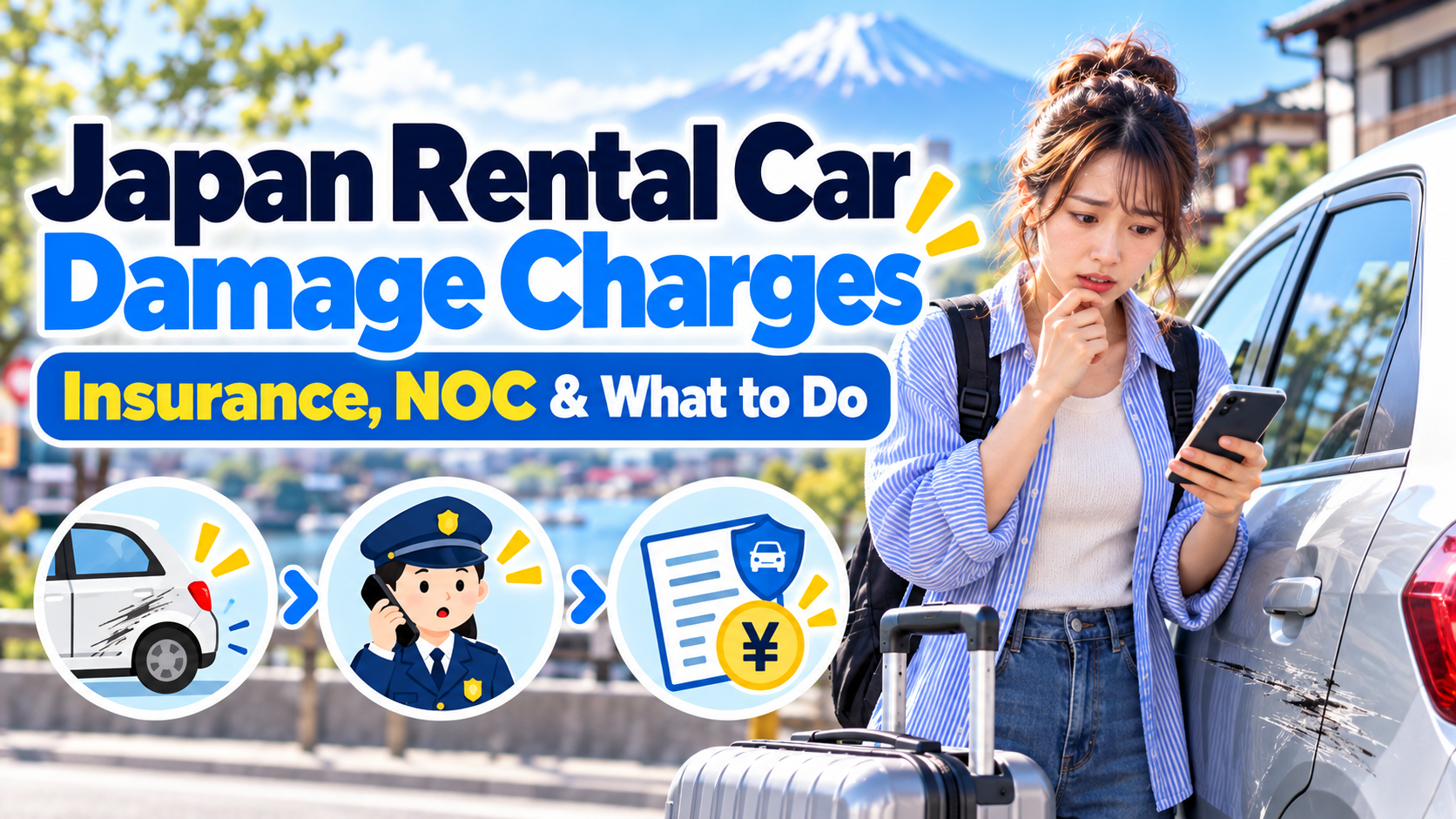
Facing unexpected Japan rental car damage charges? An insurance plan does not always cover every repair, cleaning bill or non-operation charge (NOC). Check your rental agreement, document what happened, and ask the rental company for an itemized explanation. If an accident occurs, contact the police and rental company promptly according to the applicable rules.
Quick Answer: What Should You Do?
- If charged: ask the rental company for an itemized bill showing any repair or cleaning costs, insurance deductible, and non-operation charge (NOC) separately. Ask which terms in your rental agreement apply, request photos, and check what your insurance or waiver covers.
- Before driving: review the insurance, deductible, NOC and accident-reporting rules; inspect the vehicle and record pre-existing damage with staff.
- After an accident: make sure everyone is safe, seek emergency help if necessary, and promptly contact the police and rental company.
- If unresolved: keep records and consider official consumer advice, but do not assume a refund is guaranteed.
What Are Japan Rental Car Damage Charges?
A post-rental bill may contain several different items. The exact terminology, amount and conditions depend on the provider. Ask the company to distinguish these charges instead of treating the total as a single repair fee.
| Charge | What it can mean |
|---|---|
| Repair costs | Costs of repairing damage for which the renter is responsible under the contract |
| Deductible / excess | The amount the renter may still owe on a covered insurance claim |
| NOC (non-operation charge) | Compensation for the period a damaged vehicle cannot be rented out |
| Cleaning costs | Costs for contractually chargeable soiling, odors or vehicle-interior damage |
What Is an NOC in Japan?
NOC means non-operation charge. According to Japan’s National Consumer Affairs Center, it compensates the rental business when a vehicle requires repairs and cannot be rented during that period. A repair charge and an NOC may therefore be separate items. Whether a particular NOC is payable depends on the circumstances and the contract.
The official example involving incorrect fuel explains why the basis for an NOC must be checked against the agreement. Read the National Consumer Affairs Center NOC FAQ.
Does Rental Car Insurance Cover Every Scratch or Accident?
No universal guarantee applies. Insurance coverage, exemptions and optional waivers vary by rental company. The National Consumer Affairs Center warns that failing to promptly report an accident to the police and the rental company may result in insurance or compensation not applying, leaving the renter responsible for repairs.
See the official scratches and insurance FAQ and high repair-charge FAQ.
Before You Collect the Rental Car
- Read the damage, excess/deductible, insurance exclusions, NOC waiver and cancellation conditions before signing.
- Inspect scratches, dents, windscreen, wheels and the interior together with a staff member.
- Request that pre-existing damage be recorded in the handover documents.
- Take timestamped photographs or a video where permitted, including the fuel level and dashboard.
- Confirm the required fuel type and where the emergency/accident contact details are written.
- Ask what to do after even a minor collision, and keep a copy of the agreement.
JNTO also recommends checking scratches or dents with rental staff before leaving. See its rental-car information for Japan.
What to Do Immediately After an Accident
- Stop safely and check whether anyone is injured. In an emergency, contact the police or ambulance as appropriate.
- Report the accident to the police according to the applicable requirements, even if the damage seems small.
- Contact the rental company’s emergency or accident contact promptly and follow its instructions.
- Take photographs and record relevant facts where safe and lawful.
- Keep police reference information, the rental agreement and communications with the provider.
Do not assume that a private agreement with another driver, or simply returning the vehicle, satisfies your rental company’s reporting conditions. Review the contract and follow official instructions. For emergencies in Japan, police are available on 110 and ambulance/fire on 119.
What If You Receive a High Charge After Returning the Car?
If you receive unexpected Japan rental car damage charges after returning the vehicle, do not ignore the bill. Start by checking the rental agreement and requesting a detailed explanation of each charge.
- Ask whether the bill concerns damage, repairs, NOC, cleaning or another contractual fee.
- Request an itemized statement, dated photographs, and the relevant contract clause.
- Compare the handover and return records, including the photographs you took.
- Ask why insurance, a deductible waiver or an NOC waiver did or did not apply.
- Explain any factual disagreement in writing and request a documented response.
An unexpected bill is not automatically improper. Equally, an invoice alone does not explain whether every fee is justified. The appropriate next steps depend on the agreement, actual damage and applicable rules.
Cleaning Fees, Fuel Errors and Other Disputes
The National Consumer Affairs Center also documents disputes over cleaning charges after the vehicle was checked by staff at return, and charges related to putting the wrong fuel into a rental car. Interior staining or odors may not be covered by insurance. Ask for the contract provision and the basis for the charge. See its cleaning-charge FAQ and wrong-fuel and NOC FAQ.
Useful English Phrases
Before renting: “Does this insurance cover the deductible and the NOC, or would I need a separate waiver?”
After an accident: “I had a minor accident. I have contacted the police. Please tell me what I must do to keep my coverage valid.”
Disputing a bill: “Could you provide an itemized breakdown, photographs of the damage, and the relevant terms of my rental agreement?”
These are NewtoJapan example phrases, not official legal scripts.
Where Can Tourists Get Advice?
If a consumer dispute with a rental company remains unresolved while you are visiting Japan, read our Japan Tourist Consumer Hotline guide. The official service may provide advice, but cannot force a rental company to refund a charge. For urgent accidents or injuries, seek emergency assistance instead.
Frequently Asked Questions
Can a rental car company charge for a small scratch?
Charges depend on the contract, who is responsible for the damage, the applicable insurance and the evidence. Ask the company to identify the contractual basis and provide details.
Is NOC the same as a repair bill?
No. NOC relates to loss of operation while a vehicle cannot be rented out; repair charges concern the cost of repairing damage. They may be separate.
Does insurance always cover rental car accidents in Japan?
No. Terms and exclusions vary. Failure to comply with accident-reporting requirements may affect coverage.
Should I report even a minor accident to the police?
Follow the relevant reporting requirements and contact the police and rental company promptly. Do not assume minor damage is exempt from the rental contract’s reporting conditions.
What if I discover a charge after returning the rental car?
Request an itemized invoice, supporting photographs, the agreement terms and an explanation of any insurance exclusions. Keep your handover records.
Can I be charged for cleaning?
Some contracts allow cleaning charges for excessive soiling, odors or interior damage. Check the agreement and ask for the basis for the specific amount.
What if I put the wrong fuel in the rental car?
Stop using the vehicle and promptly seek guidance from the rental company. Wrong fueling can lead to repair costs and potentially an NOC under the agreement.
Can the Japan Tourist Consumer Hotline cancel the charge?
No. It offers consumer advice but does not have authority to compel the company to cancel or refund fees.
Official Sources
- National Consumer Affairs Center: High Rental Car Repair Charges
- National Consumer Affairs Center: Insurance Not Covering Scratches
- National Consumer Affairs Center: Wrong Fuel and NOC
- National Consumer Affairs Center: Cleaning Fees
- JNTO: Things to Know When Renting a Car
General consumer information only, not individualized legal or insurance advice. The applicable rental agreement and current official guidance should always be checked.